
Énergie verte, économie d'eau: applications pour les systèmes d'alimentation en eau solaire
April 21st will mark the beginning of Eid al-Fitr. On this day, Muslims typically wake up very early, perform morning prayers, and then enjoy some food, symbolizing the end of the month of fasting.

On this special day, Muslims celebrate their faith and unity, as well as their aspirations for peace and compassion.
However, this holiday is also accompanied by a serious problem: water usage. During this period, Muslims consume a significant amount of water resources due to communal dining and various activities after sunset, which can put pressure on the local water supply system. Moreover, in some areas, the water supply system may not be sufficient to meet the needs of all Muslims, which can lead to interruptions in water supply or deterioration of water quality. This can cause great difficulties for Muslims living in impoverished areas or areas without sufficient piped water supply.

Recently, nearly 50% of the residents in Kedah state, Malaysia, or about 1 million people, are feared to face a water shortage crisis during the upcoming Hari Raya Aidilfitri festival. It is reported that Kedah residents will need about 7.8 million liters of tap water per day during this festival period, and with the influx of people returning home during the festival, the estimated water demand during the entire festival period will increase by 30%, or about 2.5 million liters per day. Residents are forced to start storing water from this week onwards.

Johor state has also decided to temporarily activate 3 water filtration stations that are still under construction during the Hari Raya Aidilfitri festival period. In addition, they are preparing 28 mobile water tankers to cope with the water supply demand during the festival. To address this problem, we can explore some solutions, among which the solar-powered water supply system is a very effective solution. As a renewable energy source, it can reduce reliance on traditional energy sources, while also reducing negative impacts on the environment.

In Myanmar, communities affected by drought have difficulty accessing safe water.
While a large portion of the country receives ample rainfall each year, the Magway region frequently experiences drought, which has been worsened by the impacts of climate change.
As a result, safe water is often only accessible from a depth of 100 meters underground, presenting significant challenges.

In the past, relying solely on a manual water pump, there was often no water available during the summer due to a significant drop in water levels. This meant that locals had to travel long distances to obtain water, which was undoubtedly a heavy burden. To help solve the water scarcity problem, UNICEF has collaborated with the local government to install a solar-powered water pump system in the village, which now supplies water directly to every household. The new solar-powered water pump system uses solar energy to pump water from deep underground, which then flows into a large water tank that stores enough water to meet daily water supply needs. The water flows directly into each household through a pipeline system, thanks to the force of gravity. Compared to manual water pumps and diesel water pumps, solar-powered water pumps rarely break down. However, to prevent any unforeseen circumstances, the village's water and sanitation committee still charges a small fee based on water usage each month (an average of one US dollar per household per month).

In South Sudan, the lack of modern water supply infrastructure has posed a serious and long-standing problem for local residents. In Yambio, South Sudan, a solar-powered water supply system has provided reliable clean water for remote areas.

During both the dry and rainy seasons, people require a significant amount of clean water to sustain their livelihoods and maintain hygiene. However, the lack of water resources and the distance of water sources from the community result in many residents having to travel long distances to collect water.

The introduction of solar-powered water supply systems has addressed this issue. These systems pump purified water from boreholes to different communities, schools, and healthcare centers, providing reliable clean water. The introduction of solar-powered water supply systems has addressed this issue. These systems pump purified water from boreholes to different communities, schools, and healthcare centers, providing reliable clean water. The advantages of using solar-powered water supply systems are evident. Local residents no longer need to trek long distances to fetch water, reducing the risks of fatigue and injury. Especially for children, having access to clean water near their homes without having to walk long distances or carry heavy water containers means that they can survive, grow up healthy, and receive education better. Access to clean water in schools and communities can also improve the quality of life and community hygiene. Clean water and toilets in schools can provide a better learning environment and reduce the education gap between remote and urban areas.

In summary, solar-powered water systems have provided reliable access to clean water for remote areas in South Sudan, improving the living conditions of local residents. The widespread adoption of this technology could provide valuable experience and inspiration for other remote areas lacking water infrastructure.
Solar technology provides a sustainable solution for addressing the global water scarcity issue today. Solar-powered water systems are an important application of this technology, which converts solar energy into electricity through solar panels and uses it to drive water pumps and transport water to where it is needed, without relying on external energy sources.It can provide water for livestock or irrigation as well as for households. They are particularly suitable for small-scale or community-based irrigation, as large-scale irrigation requires a large amount of water, which in turn requires a large solar photovoltaic array.
Since water may only be needed during certain parts of the year, a large photovoltaic array would provide unnecessary excess energy, making the system inefficient.
If you are looking for a solution, you can try our TOPCon modules.


- The maximum power is 480W, 120 pieces of M10 mono-crystalline silicon cells.
- 16-busbars , better conduction efficiency, the maximum efficiency can reach 22.16%.
- Anti PID, low LID. Minimize the impact and probability of light decay.
- Quiet operation, no need to worry about noise pollution.
- Flexible installation, both on the ground and on the roof, effectively using the space.
- No additional raw materials are required, no emissions, and electricity can be produced 12 hours a day.
- Longer service life, 12-year warranty, 30-year performance guarantee.
- Strong environmental pressure resistance, can withstand 2400Pa wind pressure, 5000Pa snow pressure.
- Won TUV, CE, ISO and many other international quality certifications and fire protection certifications to ensure that product investment can quickly recover costs and help achieve profitability.
Finally, I sincerely wish Muslims a happy Eid al-Fitr!

If you are interested in solar energy and would like to learn more about our products, please feel free to contact us.

【Disclaimer】
1、Some of the images and materials used in the article are sourced from the internet. If there is any infringement, they will be removed promptly.
2、The text and images are for readers' reference only. Please refer to the actual situation.
 Radiant Gathering in São Paulo | Sunpro Power Showcases at Intersolar South America 2026
  Re‑elected Consecutively! Sunpro Power Reappears on BNEF Tier 1 List for Q3
  Sunpro Power’s PV Modules Earn Authoritative Certifications From TÜV SÜD, Robust Quality Fuels Global Market Expansion
 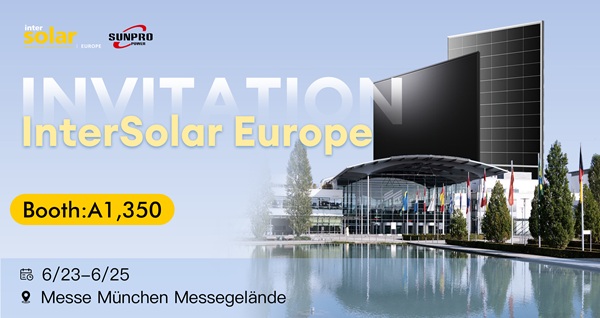 Shine Bright in Munich! Sunpro Power Showcases High-Efficiency Modules at Intersolar Europe 2026
  TÜV SÜD and Sunpro Power Sign ESG Strategic Cooperation Agreement to Empower Green Industrial & R&D Upgrading
  Powerful Lineup Debuts in Shanghai! Sunpro Power’s High-Efficiency Modules Shine at SNEC 2026
  Sunpro Power Secures Spot Again on BNEF Tier 1 List for 2026 Q2
  Hardcore Lineup Lands in Manila! Sunpro Power High-Efficiency Modules Shine at Solar & Storage Live Philippines 2026
  Hardcore Certification! Sunpro Passes TÜV Thresher Test, Reliability Receives Endorsement
  Smart Energy in Vienna! SUNPRO POWER Presents High-Efficiency Modules at Solar Solutions 2026
 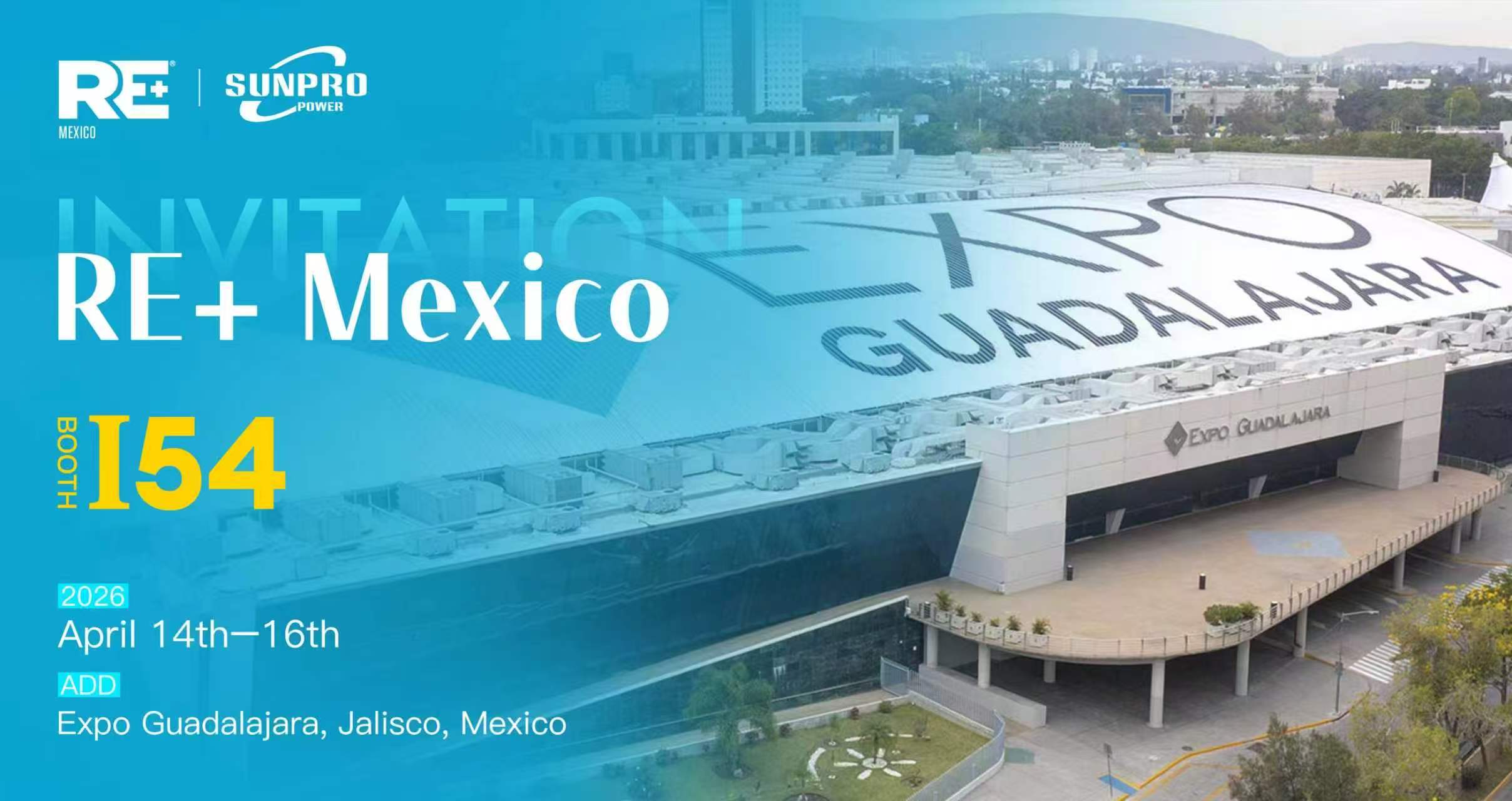 Green Energy Crosses Borders! SUNPRO POWER’s High-Efficiency Modules Shine at RE+ México 2026
 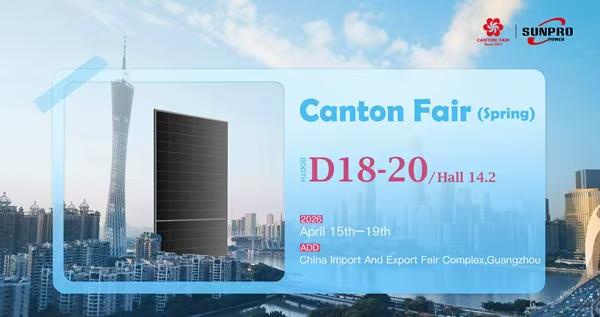 Hardcore Lineup Shines in Guangzhou! SUNPRO POWER’s High-Efficiency Modules Debut at the 139th Canton Fair
  Sunpro Earns Multiple ISO Certifications, Forging a Solid Foundation for Development with Rigorous Management
  Efficiency and Aesthetics in One: SUNPRO POWER's High-Efficiency Modules Shine at Key Energy 2026 Italy
  Major Certification! Multiple Sunpro TOPCon Modules Awarded France's PPE2 Carbon Footprint Certification, Unlocking the Green Pass to the French Market
  2026 Tier1 Q1 Ranking Announced | Sunpro Power Maintains Its Leading Position
 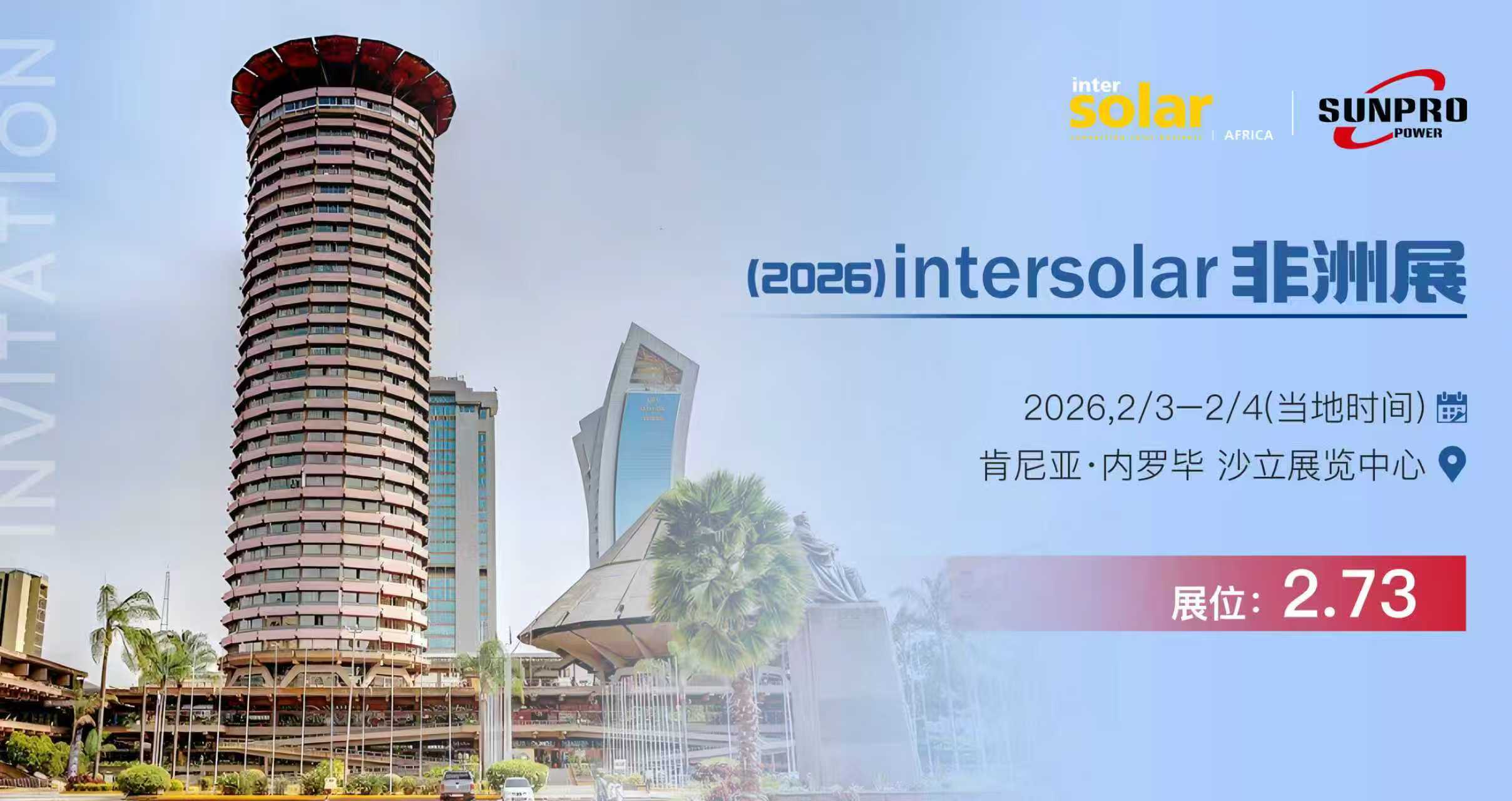 Kicking Off 2026 with a Grand Debut! Sunpro power Makes a Powerful Appearance at Intersolar Africa 2026, Illuminating Africa's Energy Future!
  Perovskite Solar Technology Achieves Major Breakthrough! Durability Challenge Conquered
  Poland's PV Target: 59.1GW by 2035, Emerging as a Key Driver of Europe's Energy Transition
  Sunpro Retains BloombergNEF Tier 1 PV Module Manufacturer Status for Q4 2025