
A água e a luz coexistem, duplicando a eficiência! valorizar o trabalho!
On the International Labor Day, China's traditional Golden Week of tourism will begin. Naturally, tourism related information will be released during this period. In combination with recent hot spots, my social circle has also been overwhelmed by a local snack. People who surf the internet may know.
Yes, the barbecue in Zibo City.

As a industrial city with a population of nearly 5 million, a snack has completely ignited local tourism. Until now, the information on social media platforms is either eating barbecue or on the way to eating barbecue.
However, everything has its advantages and disadvantages. While the tourism economy is booming, it also makes this city with weak tourism facilities overloaded. Even more troubling is that the omens of power shortages have become prominent.
Relying on hydropower
When it comes to energy projects in Zibo, the first thing locals think of is the Taihe Reservoir. As the largest reservoir in Zibo City, it has a total storage capacity of 183.3 million cubic meters and an annual power generation of approximately 4 million kilowatt hours. It is also one of the famous tourist areas. It has functions such as flood control, irrigation, urban and rural water supply, hydroelectric power generation, and aquaculture.

In addition to thermal power generation, the largest proportion of local energy structure is in this reservoir, but due to climate reasons in the past two years, the power generation has not been stable.
According to the latest data from the Hydrological Center of Zibo City, the overall precipitation in the local area was relatively low in March of this year, which is the second lowest value in history since records began in 1952 (the precipitation in March 2011 was 0). On April 1st, the total storage capacity of five large and medium-sized reservoirs in the local area was 226.81 million cubic meters, a decrease of 8.27 million cubic meters compared to the same period last year. A total of 9.81 million cubic meters of water storage were reduced within the month.

The decrease of water level will lead to the reduction of power generation. In addition to the tourism development brought by the May Day Golden Week, the local power system will face a huge test. How to fill the power gap caused by water level decline will be an urgent problem for reservoirs to solve.
Diversification filling
In order to solve the problem of single power structure and unstable new energy, the Zibo Municipal Government is actually trying to broaden the energy structure. In February of this year, a rooftop distributed photovoltaic power plant with an installed capacity of 5.48MW was officially connected to the grid for power generation. The annual power generation capacity is 6.3 million kilowatt hours, equivalent to the total electricity consumption of 1000 ordinary households for three years.

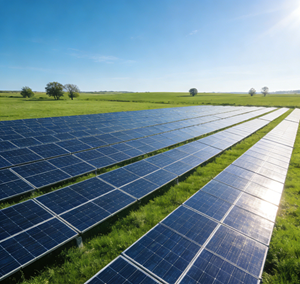
As of February, 32000 distributed photovoltaic units have been installed in the city, with a grid connected capacity of 1.233 million kilowatts. During the period from 2021 to 2025, a new photovoltaic installed capacity of 5 million kilowatts will be added. Considering the power shortage in reservoirs, photovoltaic can also be used to fill the gap, and installing photovoltaic in reservoirs has inherent advantages. Hydropower and photovoltaic can also coexist harmoniously and complement each other.
Fully utilize and double profits
Generally speaking, reservoirs have significant restrictions on photovoltaic installation, and many countries strictly manage or even prohibit the construction of photovoltaic power stations in reservoirs. However, if conditions are suitable, photovoltaic construction will output more electricity and reduce construction costs. For example, the Muttsee High Mountain Reservoir in the state of Glarus, Switzerland has built a 2 megawatt photovoltaic power plant. Approximately 6000 PV modules are deployed on an area of approximately 10000 square meters, with an inclination of 77 degrees for the upper modules and 51 degrees for the lower module array. It is expected that the power plant will generate approximately 2.7 GWh of solar energy annually.

This form can also be used in low altitude areas, with lower construction risks. Taking the Heiso Dam, a Hyogo Prefecture dam power plant built in 2016, as an example, its annual power generation is 1.8 million kWh.

The slopes of the dams are all above 20 degrees, with a maximum of about 27 degrees and an average slope of 22 degrees. The direction faces south, and only the solar panels need to be fixed along the slope. The installation interval can also be shortened, without worrying about the impact of front row obstruction. It can also save land and improve power generation. The water vapor from the reservoir can also cool the solar panels. Of course, limitations also need to be noted.
Precautions for Dam Photovoltaics
Firstly, the foundation needs to be higher than the dam slope, and there are restrictions on the proportion of the set area to the overall dam slope and the load-bearing conditions. For example, the base of PCS is higher than usual, and the fixed fence also needs to be raised higher due to the limitations of ground excavation depth. This may lead to an increase in construction costs (Heiso Dam cost 800 million yen at the time, approximately 7.36 million US dollars)

Secondly, photovoltaic power generation equipment cannot be installed around the dam slope management facilities to prevent accidents. Thirdly, the soil quality of the installation site needs to be investigated, and the installation base method needs to be adjusted based on the soil. For example, when the dam body is composed of rock and sand, concrete needs to be poured before pouring the base. For a dam body composed solely of soil, it is necessary to pour mortar into the soil before pouring the foundation. After the above planning requirements are completed, modules can be installed. But just like building a foundation, there are many conditions that need to be met.
Requirements for waterproofing and attenuation performance
The solar modules installed in reservoirs have strict quality requirements for waterproofing and attenuation performance, so Sunpro recommends using double glass modules with better waterproofing performance. In order to reduce the light attenuation rate, we recommend using TOPCon components, with a 30 year attenuation rate of 87.3%. As a power plant project, the higher the natural power, the better.
Taking into account the above. We recommend using this product


- Pmax 580W. 120 Pieces of N-type mono-crystalline silicon batteries.
- 16-busbars design, with better conduction efficiency and a maximum efficiency of 22.44%.
- Anti PID, low LID. Reduce the impact and probability of light decay.
- Double sided glass improves power generation efficiency, blocks water vapor infiltration, and has a longer service life.
- Quiet operation without worrying about noise pollution.
- Flexible installation, both on the ground and on the roof, effectively utilizing space.
- No need for additional raw materials, no emissions, and can generate electricity 12 hours a day.
- Longer service life, 15 year warranty, 30 year performance guarantee.
- Strong environmental pressure resistance, capable of withstanding wind load of 2400Pa and snow load of 5000Pa.
- The temperature can operate between -40~+85 ℃, and the normal operating temperature of the battery is 45 ± 2 ℃.
- We have been awarded multiple international quality certifications and fire safety certifications such as TUV, CE, ISO, etc. to ensure efficient operation of our products.
If you are also considering adding diversified power sources to related facilities,
I hope these can help you.
For more product information,
please feel free to contact us

Business activities are skyrocketing; don't let energy make you miss the opportunity. Happy Labor Day!

【Disclaimer】
1/ The text used in the picture and information part of the source network, infringement deleted.
2/ The text and pictures are for readers' reference only, please refer to the actual situation.
 Radiant Gathering in São Paulo | Sunpro Power Showcases at Intersolar South America 2026
  Re‑elected Consecutively! Sunpro Power Reappears on BNEF Tier 1 List for Q3
  Sunpro Power’s PV Modules Earn Authoritative Certifications From TÜV SÜD, Robust Quality Fuels Global Market Expansion
 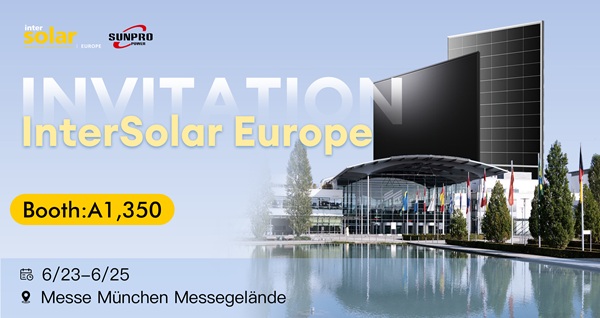 Shine Bright in Munich! Sunpro Power Showcases High-Efficiency Modules at Intersolar Europe 2026
  TÜV SÜD and Sunpro Power Sign ESG Strategic Cooperation Agreement to Empower Green Industrial & R&D Upgrading
  Powerful Lineup Debuts in Shanghai! Sunpro Power’s High-Efficiency Modules Shine at SNEC 2026
  Sunpro Power Secures Spot Again on BNEF Tier 1 List for 2026 Q2
  Hardcore Lineup Lands in Manila! Sunpro Power High-Efficiency Modules Shine at Solar & Storage Live Philippines 2026
  Hardcore Certification! Sunpro Passes TÜV Thresher Test, Reliability Receives Endorsement
  Smart Energy in Vienna! SUNPRO POWER Presents High-Efficiency Modules at Solar Solutions 2026
 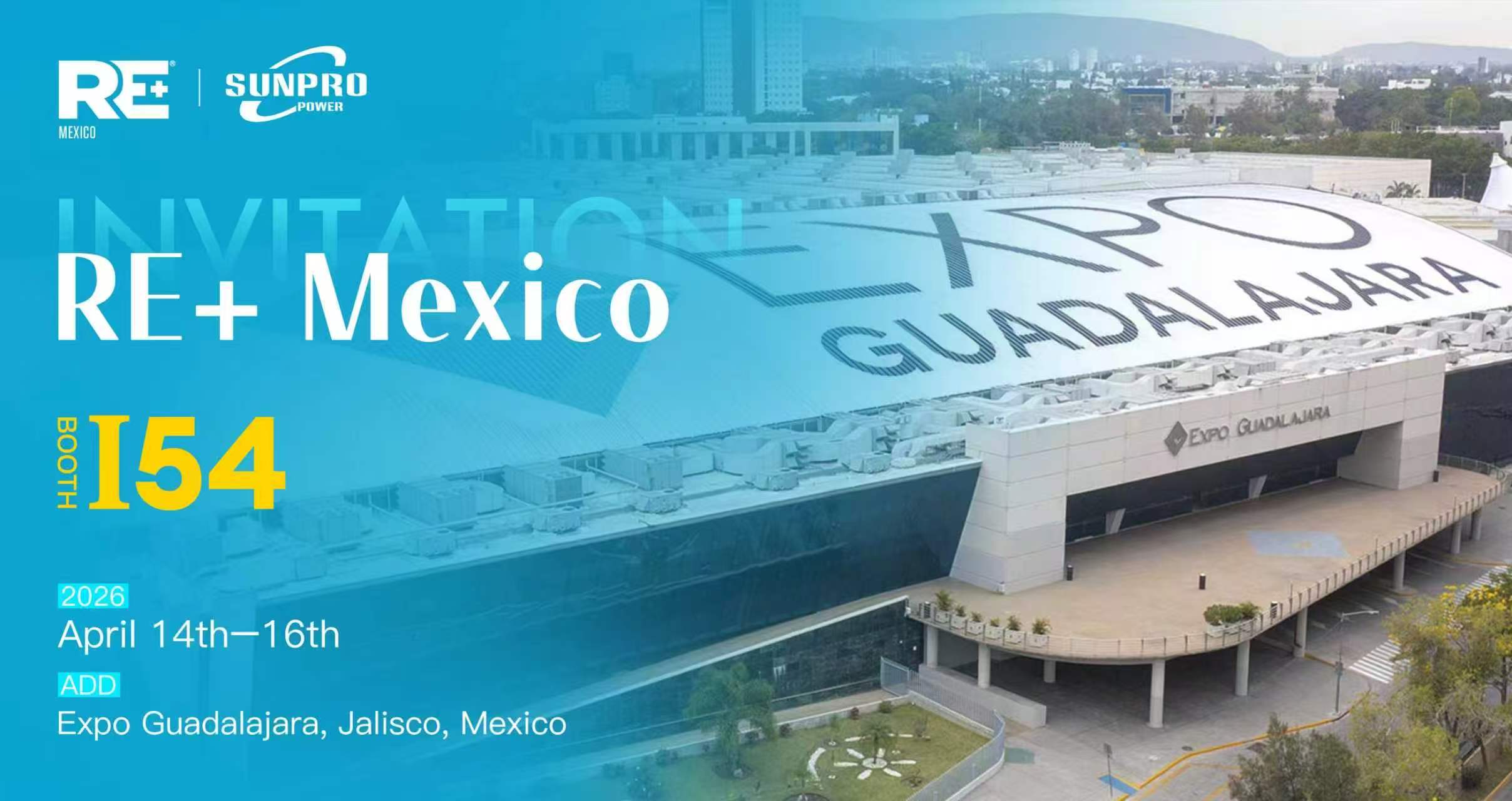 Green Energy Crosses Borders! SUNPRO POWER’s High-Efficiency Modules Shine at RE+ México 2026
 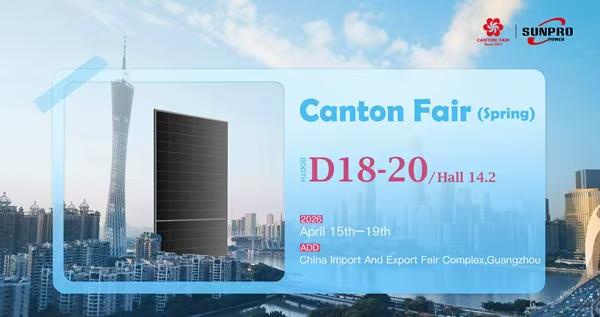 Hardcore Lineup Shines in Guangzhou! SUNPRO POWER’s High-Efficiency Modules Debut at the 139th Canton Fair
  Sunpro Earns Multiple ISO Certifications, Forging a Solid Foundation for Development with Rigorous Management
  Efficiency and Aesthetics in One: SUNPRO POWER's High-Efficiency Modules Shine at Key Energy 2026 Italy
  Major Certification! Multiple Sunpro TOPCon Modules Awarded France's PPE2 Carbon Footprint Certification, Unlocking the Green Pass to the French Market
  2026 Tier1 Q1 Ranking Announced | Sunpro Power Maintains Its Leading Position
 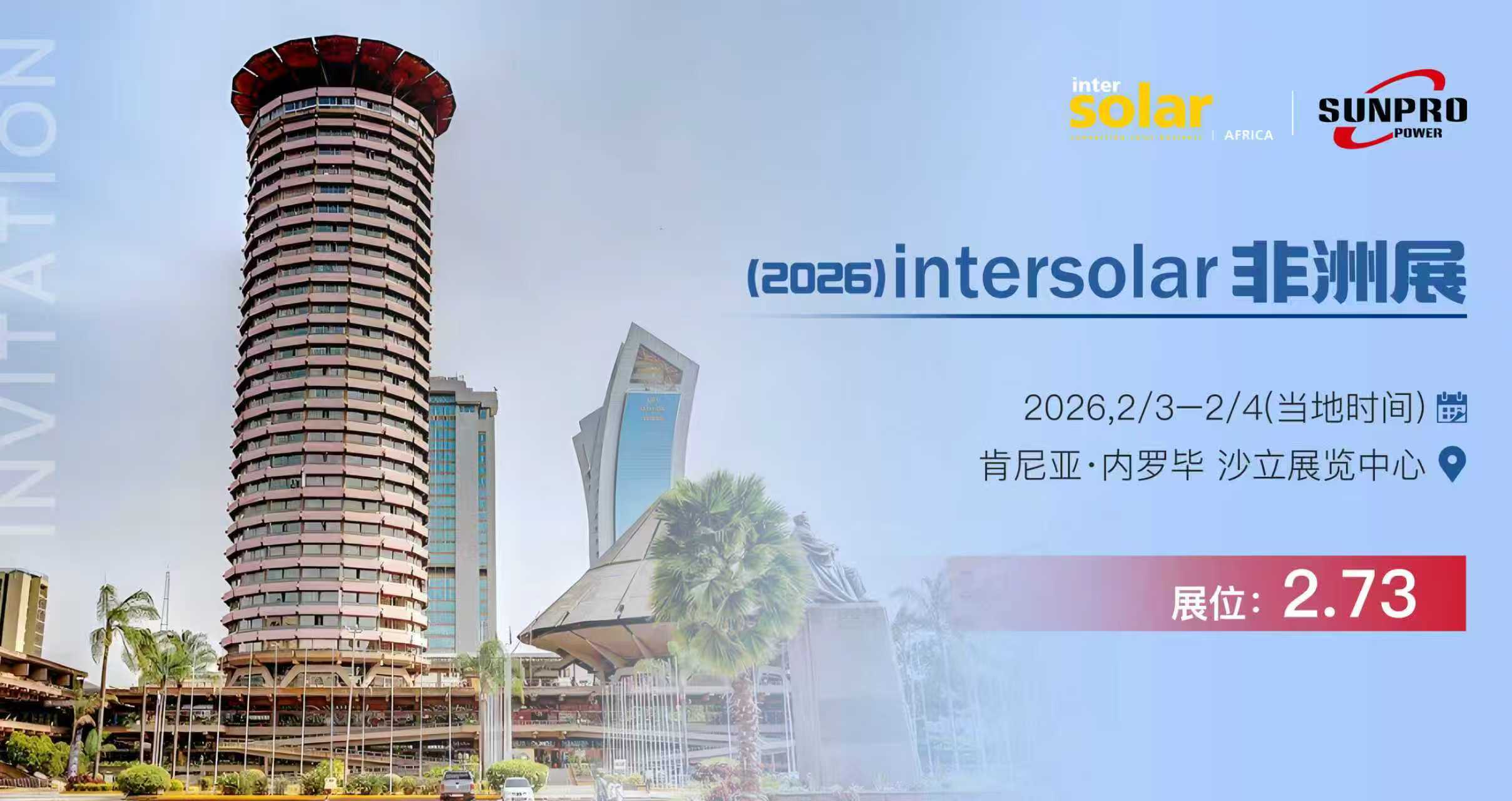 Kicking Off 2026 with a Grand Debut! Sunpro power Makes a Powerful Appearance at Intersolar Africa 2026, Illuminating Africa's Energy Future!
  Perovskite Solar Technology Achieves Major Breakthrough! Durability Challenge Conquered
  Poland's PV Target: 59.1GW by 2035, Emerging as a Key Driver of Europe's Energy Transition
  Sunpro Retains BloombergNEF Tier 1 PV Module Manufacturer Status for Q4 2025