
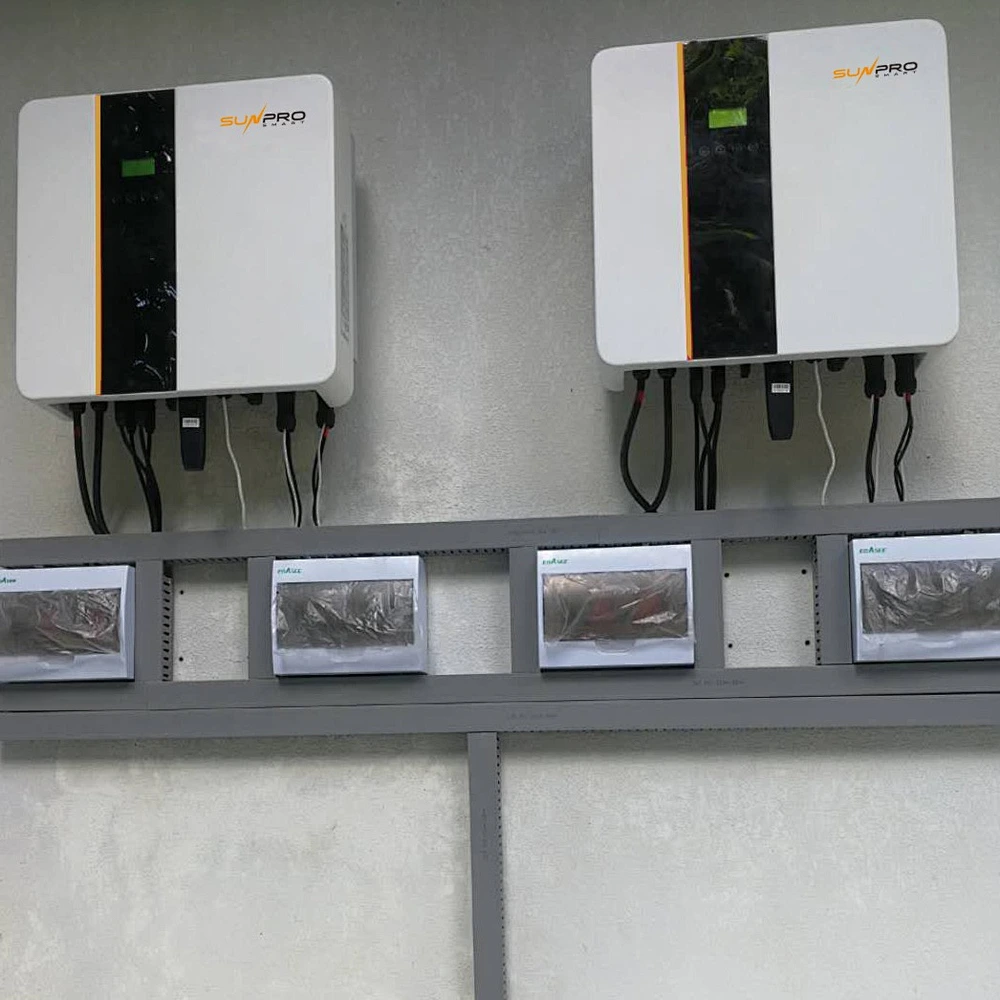
Solar Energy Storage 3KW hybrid inverter
price
US $0.20 - US $0.35 / watt
SP3KL1
FOB/CIF/EXW/DDP
1 watt
1GWwatt / Year
China
30Day
Discover your perfect energy solution
Quantity
Electricity storage - what's behind it?
Photovoltaic systems without storage produce solar power that has to be used immediately. This is seldom effective as the electricity is mostly generated during the day. During this time, however, most households' electricity needs are low. As a rule, the need increases significantly in the evening hours. With a storage system, you can use the solar power that is not needed during the day when you really need it.
Without having to change your habits, you can achieve:
The product specification as below:
PEAK SHAVING
Use stored energy during peak times to reduce or eliminate demand charges
LOAD SHIFTING
Shift energy usage by charging batteries on solar and discharging when electricity is more expensive
EMERGENCY BACKUP
Keep your operations running seamlessly during power outages
MICROGRIDS
Eliminate expensive generator usage and reduce interruptions from blackouts with continuous, reliable power
RENEWABLE INTEGRATION
Smooth the output of renewable power generation sources such as wind and solar
GRID SERVICES
Provide reserve capacity, frequency regulation, and voltage control to the grid
Photovoltaic systems without storage produce solar power that has to be used immediately. This is seldom effective as the electricity is mostly generated during the day. During this time, however, most households' electricity needs are low. As a rule, the need increases significantly in the evening hours. With a storage system, you can use the solar power that is not needed during the day when you really need it.
Without having to change your habits, you can achieve:
- The sustainable reduction of your electricity bill,
- Your personal contribution to the energy transition and the optimization of your own consumption
- increasing independence from energy suppliers.
The product specification as below:
| Datasheet | SP3KL1 | SP3K6L1 | SP4KL1 | SP4K6L1 | SP5KL1 | SP6KL1 |
| DC Input | ||||||
| Max. Input Power | 4600W | 6000W | 7000W | |||
| Start-up Voltage | 125V | |||||
| Max. PV Voltage | 550V | |||||
| MPPT Range/Nominal | 125V-500V /360V | |||||
| Max. Input Current | 14A/14A | |||||
| MPPT Tracker/Strings | 2/1 | |||||
| AC Output | ||||||
| Rated Power W/VA | 3000VA/3000W | 3600VA/3600W | 4000VA/4000W | 4600VA/4600W | 5000VA/5000W | 6000VA/6000W |
| Max. Output Current | 13A | 16A | 17.4A | 20A | 21.7A | 26A |
| Nominal Voltage/Range | 230Vac /176Vac~270Vac | |||||
| Frequency | 50 /60Hz | |||||
| PF | 1(0.8lagging-0.8leading) | |||||
| THDI | <3% | |||||
| AC Output Topology | L+N+PE | |||||
| Battery | ||||||
| Battery Voltage Range | 40~58V | |||||
| Max. Charging Voltage | 58V | |||||
| Charge/Discharge Current | 95A/62.2A | 95A/75A | 95A/83.3A | 95A/95.8A | 95A/104.2A | 95A/110A |
| Battery Type | lithium /Lead-acid | |||||
| Communication Interface | CAN | |||||
| EPS Output | ||||||
| Rated Power W/VA | 3000VA/3000W | 3600VA/3600W | 4000VA/4000W | 4600VA/4600W | 5000VA/5000W | 6000VA/6000W |
| Rated Voltage | 230Vac | |||||
| Rated Current | 13A | 16A | 17.4A | 20A | 21.7A | 26A |
| Rated Frequency | 50Hz | |||||
| Automatic Switchover Time | <20ms | |||||
| THDU | <2% | |||||
| Overload capacity | 110%,60S/120%,30s/150%,10s | |||||
| General Data | ||||||
| Battery Chage/Dischage | 95% | |||||
| DC Max. Efficiency | 97.60% | |||||
| Euro Efficiency | 97% | |||||
| MPPT Efficiency | 99.90% | |||||
| Protection class | IP65 | |||||
| Noise Emission (Typical) | <35dB | |||||
| Operation Temperature | -25~+60℃ | |||||
| Cooling | Natural | |||||
| Relative Humidity | 0 ~95% (non-condensing) | |||||
| Altitude | 2000m | |||||
| Dimensions (W/D/H) mm | 550/200/515mm | |||||
| Weight | 25kg | |||||
| Inverter Topology | transformerless | |||||
| Self-Consumption | <3W | |||||
| Features | ||||||
| Display | LCD | |||||
| Interface:RS485/Wifi/LAN/CAN/DRM | yes/opt/opt/yes/yes | |||||
| Certificates | CE、TUV、SAA、IEC62166:2014、IEC61683:1999 | |||||
PEAK SHAVING
Use stored energy during peak times to reduce or eliminate demand charges
LOAD SHIFTING
Shift energy usage by charging batteries on solar and discharging when electricity is more expensive
EMERGENCY BACKUP
Keep your operations running seamlessly during power outages
MICROGRIDS
Eliminate expensive generator usage and reduce interruptions from blackouts with continuous, reliable power
RENEWABLE INTEGRATION
Smooth the output of renewable power generation sources such as wind and solar
GRID SERVICES
Provide reserve capacity, frequency regulation, and voltage control to the grid