
How to choose Monocrystalline and Polycrystalline solar panels?
2022-02-18
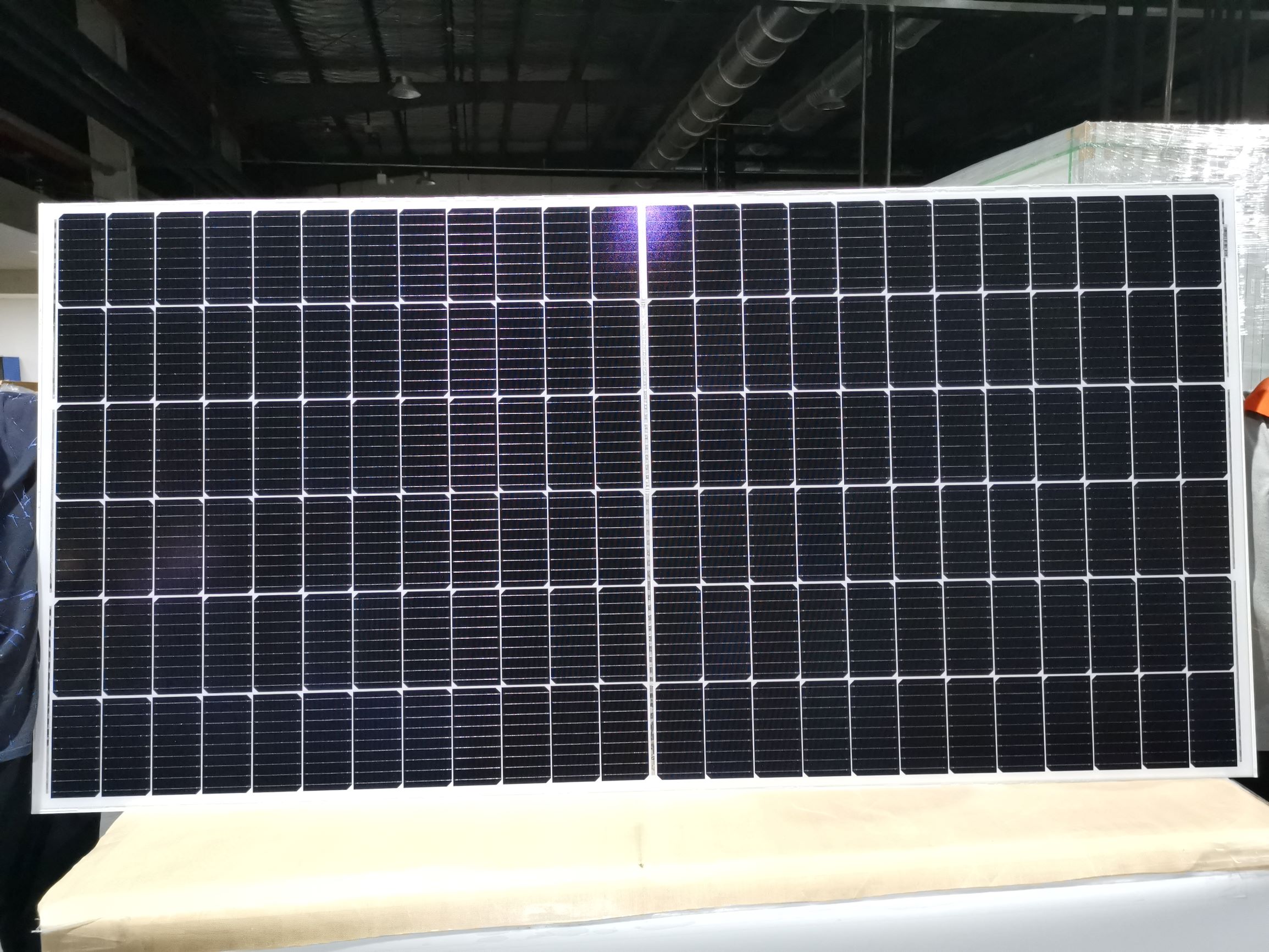
You want to purchase solar panels, but which solar panels should you purchase now, polycrystalline or monocrystalline?
What exactly is the difference between these 2 types of solar panels? Polycrystalline silicon and monocrystalline silicon are both made from silicon sand, the difference is mainly in the production process and the color of the final panel.
During the production process of the polycrystalline ingots, liquid silicon is poured into a square mold. Gradual cooling creates solid silicon that consists of several crystals. The crystals are then crisscrossed, creating “spots” in the polycrystalline solar panels. Due to innovation, the poly solar panels have become more and more beautiful and even in color in recent years.
Poly solar panels
With monocrystalline silicon, the polarization of the crystals is influenced during solidification, the so-called Czochralski process. Due to this process, the crystals all lie in the same direction and form a homogeneous whole, which results in an even panel color. In contrast to poly solar cells, mono cells are sawn from a round silicon rod. To make optimal use of the rod, manufacturers have calculated the optimal surface. This means that 4 pieces are cut from the round disc, leaving a square with small round corners. And that is one of the points where the monocrystalline cells can be recognized. Nowadays, however, completely square mono cells are also being produced, the so-called square mono cells.
Mono solar panels
When exposed to direct sunlight, a monocrystalline cell will generate slightly more current than a polycrystalline cell of the same surface area. A mono panel yields more with direct radiation, a poly panel, on the other hand, works better with diffused light, on an annual basis there is hardly any difference in yield. Because more operations have to be performed when manufacturing monocrystalline cells, the price of a mono cell is higher than that of a poly cell.
Although a monocrystalline cell can generate more current than an equivalent polycrystalline cell, various tests have shown that there is virtually no difference in yield per Watt Peak used.
The biggest difference is in the price and appearance. Many people find the smooth (black appearance) of a mono solar panel more attractive and the choice is therefore more often made on appearance and price, instead of on yield.
What exactly is the difference between these 2 types of solar panels? Polycrystalline silicon and monocrystalline silicon are both made from silicon sand, the difference is mainly in the production process and the color of the final panel.
During the production process of the polycrystalline ingots, liquid silicon is poured into a square mold. Gradual cooling creates solid silicon that consists of several crystals. The crystals are then crisscrossed, creating “spots” in the polycrystalline solar panels. Due to innovation, the poly solar panels have become more and more beautiful and even in color in recent years.
| Fig. 1 Poly (old) | Fig. 2 Poly (new) |
With monocrystalline silicon, the polarization of the crystals is influenced during solidification, the so-called Czochralski process. Due to this process, the crystals all lie in the same direction and form a homogeneous whole, which results in an even panel color. In contrast to poly solar cells, mono cells are sawn from a round silicon rod. To make optimal use of the rod, manufacturers have calculated the optimal surface. This means that 4 pieces are cut from the round disc, leaving a square with small round corners. And that is one of the points where the monocrystalline cells can be recognized. Nowadays, however, completely square mono cells are also being produced, the so-called square mono cells.
| Fig. 3 Mono (old) | Fig. 4 Mono (new) | Afb. 5 Mono (Full Black) |
When exposed to direct sunlight, a monocrystalline cell will generate slightly more current than a polycrystalline cell of the same surface area. A mono panel yields more with direct radiation, a poly panel, on the other hand, works better with diffused light, on an annual basis there is hardly any difference in yield. Because more operations have to be performed when manufacturing monocrystalline cells, the price of a mono cell is higher than that of a poly cell.
Although a monocrystalline cell can generate more current than an equivalent polycrystalline cell, various tests have shown that there is virtually no difference in yield per Watt Peak used.
The biggest difference is in the price and appearance. Many people find the smooth (black appearance) of a mono solar panel more attractive and the choice is therefore more often made on appearance and price, instead of on yield.
 Radiant Gathering in São Paulo | Sunpro Power Showcases at Intersolar South America 2026
  Re‑elected Consecutively! Sunpro Power Reappears on BNEF Tier 1 List for Q3
  Sunpro Power’s PV Modules Earn Authoritative Certifications From TÜV SÜD, Robust Quality Fuels Global Market Expansion
  Shine Bright in Munich! Sunpro Power Showcases High-Efficiency Modules at Intersolar Europe 2026
  TÜV SÜD and Sunpro Power Sign ESG Strategic Cooperation Agreement to Empower Green Industrial & R&D Upgrading
  Powerful Lineup Debuts in Shanghai! Sunpro Power’s High-Efficiency Modules Shine at SNEC 2026
  Sunpro Power Secures Spot Again on BNEF Tier 1 List for 2026 Q2
  Hardcore Lineup Lands in Manila! Sunpro Power High-Efficiency Modules Shine at Solar & Storage Live Philippines 2026
  Hardcore Certification! Sunpro Passes TÜV Thresher Test, Reliability Receives Endorsement
  Smart Energy in Vienna! SUNPRO POWER Presents High-Efficiency Modules at Solar Solutions 2026
  Green Energy Crosses Borders! SUNPRO POWER’s High-Efficiency Modules Shine at RE+ México 2026
  Hardcore Lineup Shines in Guangzhou! SUNPRO POWER’s High-Efficiency Modules Debut at the 139th Canton Fair
  Sunpro Earns Multiple ISO Certifications, Forging a Solid Foundation for Development with Rigorous Management
  Efficiency and Aesthetics in One: SUNPRO POWER's High-Efficiency Modules Shine at Key Energy 2026 Italy
  Major Certification! Multiple Sunpro TOPCon Modules Awarded France's PPE2 Carbon Footprint Certification, Unlocking the Green Pass to the French Market
  2026 Tier1 Q1 Ranking Announced | Sunpro Power Maintains Its Leading Position
  Kicking Off 2026 with a Grand Debut! Sunpro power Makes a Powerful Appearance at Intersolar Africa 2026, Illuminating Africa's Energy Future!
  Perovskite Solar Technology Achieves Major Breakthrough! Durability Challenge Conquered
  Poland's PV Target: 59.1GW by 2035, Emerging as a Key Driver of Europe's Energy Transition
  Sunpro Retains BloombergNEF Tier 1 PV Module Manufacturer Status for Q4 2025