
After 50 years, the plan to land on the moon again was postponed four times due to fuel leakage! Is space competition related to energy projects?
Tip: This article was written earlier than published
"The biggest motivation for work is the coming of holidays", which has made me deeply understand recently. Since June, the temperature has been high every day for two months. Most of my colleagues don't have much energy on Monday, but they are very energetic today. I can probably guess the reason. On September 10, China's traditional festival + small holiday: the Mid-Autumn Festival is coming! I also wish Chinese all over the world a Happy Mid-Autumn Festival!

The 15th day of August of the lunar calendar is a traditional festival for Chinese people to get together with their families. Gathering, eating moon cakes and appreciating the moon is must DOS on this day. However, this year's Mid-Autumn Festival is the same day as China's teacher's day, so today let's talk about some academic topics that are more appropriate, such as spaceflight to the moon.
Highly efficient and difficult to control hydrogen fuel
Last Saturday, NASA announced its plan to land on the moon again - "Artemis (one of the moon gods in Greek mythology)", 50 years after the last moon landing. But the launch was delayed again because of hydrogen fuel leakage. After seeing this news, I paid special attention to hydrogen fuel, which is the reason for the delay.
As a new energy, hydrogen fuel produces less than renewable energy such as solar energy, but its combustion calorific value is three times that of gasoline, and it generates more energy. It is expected to be applied to large devices. In the trend of new energy vehicles, there are also two R & D trends: electric drive and environmental fuel drive. Therefore, even Musk commented on the rocket launch accident.

Although liquid hydrogen (liquid hydrogen) is considered to be a more efficient fuel in rocket launch, since hydrogen is the lightest element in the world, it is very difficult to manage it.
Even the smallest opening can make tiny hydrogen atoms escape and leak, so since this giant moon carrier rocket was pushed onto the launch pad of Kennedy Space Center, there have been four liquid hydrogen leaks.
Even so, NASA is still using hydrogen fuel because of a mandatory policy of the US Congress that it can only continue to use liquid hydrogen. In 2010, the US Congress specified the types of engines and propulsion systems used by NASA for other hardware of SLS rockets. These engines were used in the space shuttle project many years ago, and the fuel tank of the space shuttle is hydrogen fuel.

SLS rocket —— Artemis 1
Three steps to the moon
According to the original plan, if the launch is successful:

A. Launch the "Orion" spacecraft on the rocket into the lunar orbit and let the spacecraft fly around the moon
B. The construction plan of the lunar orbiting space station will be considered after orbiting the moon.
C. After the completion of the orbital space station, a manned landing on the moon will be realized at the south pole of the moon.
Obviously, this plan of the US government is intended to reproduce Armstrong's "one small step". Therefore, this has also become the headline news of the US media. However, the reason may still be anxiety about "space competition".
In recent years, with the completion of China's space station and a series of achievements in lunar exploration, China's space technology has been stably verified, and it has begun to plan further space goals, one of which is the utilization of space energy.
China's space energy program
A typical example is China's plan to build a space solar power station orbiting the earth in 2028. This may be the reason why NASA made this year's launch plan.

China's space solar power station program
According to the South China Morning Post's report in June this year, China plans to start the first phase of space station development in 2028, two years ahead of the original plan. A review paper also published in China Space Science and technology explained that a test satellite orbiting the earth about 248 miles (400 kilometers) away would be used to test the technology.
The main idea is to equip the space station with solar cell arrays to convert solar energy into electric energy. The energy will then be transmitted to the earth through a microwave emitter or a laser emitter. This satellite converts solar energy into microwave or laser, and guides the energy beam to various targets, including the earth's surface position and moving satellites.
The current envisaged power generation scale is 10KW. By 2030, 10MW solar power stations will be launched and power will be transmitted to military and civilian users.
If implemented, the project may reshape the way everyone on the planet receives electricity. Solar power generation will have more applications, such as remote wireless power transmission, which can realize the charging of electric vehicles during driving.
In fact, many developed countries, including the United States, have formulated similar power station plans before, but due to budgetary policies and other reasons, relevant projects have not been approved. Therefore, we can understand that the US, which is the leader in space technology, will feel anxious about this project.
Extension of space technology
Since the nature of solar energy in space is very different from that on earth, these advantages can greatly improve the utilization rate of solar energy:

A: The light is stable, there is no shortage of light caused by day and night and weather changes, and power generation is almost all-weather.
B: Without the reflection and absorption of the atmosphere, more light can be obtained and the power generation efficiency is higher.
C: In space, power can be transmitted to remote areas through wireless transmission, and charging freedom can be realized no matter at sea or in desert.
Of course, the core ultra-long distance wireless power transmission has not been solved, and there are also problems such as equipment aging and microwave interference. Although this technology may change the current energy industry structure, it still needs time and resources for R & D and testing. However, the basic solar energy technology for power generation is now very mature and market-oriented.
Civil application of space technology
It can also be seen from the current trend that the effective utilization of space energy is one of the future development trends, and the representative is solar energy. Especially in the context of the current energy crisis, this energy system derived from space technology has been integrated into our lives with the continuous maturity of civil technology.
Therefore, it is believed that space power stations can also be used for civilian use in the near future. After all, solar energy is very common now.
Solar energy is compared with hydropower, wind power, nuclear power and other fuels. The advantages of solar energy lie in the convenience, safety and automation of power generation.
If you are anxious about energy, you may as well try to build a civil power system, such as this “SPxxx-120M”.


************************************
A. The maximum power is 390W, M6 type mono-crystalline silicon battery.
B. 9-busbars design, the conduction efficiency is better, and the maximum efficiency can reach 21.41%.
C. Quiet operation, no need to worry about noise pollution.
D. Flexible installation, both on the ground and roof, and effective use of space.
E. No additional raw materials, no emissions, 12 hours a day can produce electricity.
F. Longer service life, 12-year warranty, 25 year performance guarantee.
G. Strong environmental pressure resistance, capable of withstanding 2400pa wind pressure and 5000Pa snow pressure.
H. It has won TUV, CE, ISO and other international quality certification and fire protection certification to ensure that the products are put into efficient operation.
*******************************************
If you are interested in solar energy and have more information and products, please contact us
Tel: +86 0576-80730906
Email: info@sunpropower.com
Website: www.sunpropower.com
*********************************************
Space technology is changing with each passing day, and energy access will be more diverse in the future. With in-depth research, the utilization of space resources may only be a small step for mankind. We can look forward to the future. That's all for today's topic. Happy holidays!
【Disclaimer】
1/ The text used in the picture and information part of the source network, infringement deleted.
2/ The text and pictures are for readers' reference only, please refer to the actual situation.
 Radiant Gathering in São Paulo | Sunpro Power Showcases at Intersolar South America 2026
  Re‑elected Consecutively! Sunpro Power Reappears on BNEF Tier 1 List for Q3
  Sunpro Power’s PV Modules Earn Authoritative Certifications From TÜV SÜD, Robust Quality Fuels Global Market Expansion
 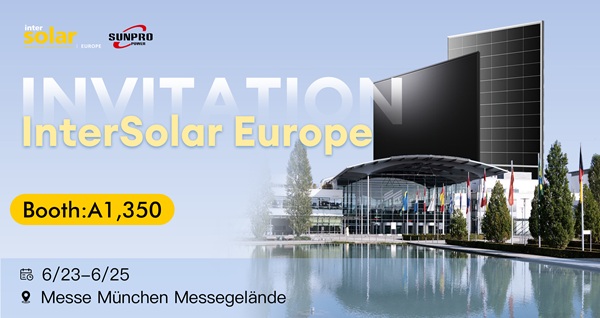 Shine Bright in Munich! Sunpro Power Showcases High-Efficiency Modules at Intersolar Europe 2026
  TÜV SÜD and Sunpro Power Sign ESG Strategic Cooperation Agreement to Empower Green Industrial & R&D Upgrading
  Powerful Lineup Debuts in Shanghai! Sunpro Power’s High-Efficiency Modules Shine at SNEC 2026
 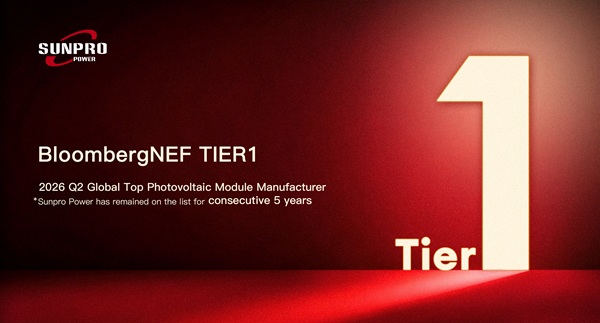 Sunpro Power Secures Spot Again on BNEF Tier 1 List for 2026 Q2
  Hardcore Lineup Lands in Manila! Sunpro Power High-Efficiency Modules Shine at Solar & Storage Live Philippines 2026
  Hardcore Certification! Sunpro Passes TÜV Thresher Test, Reliability Receives Endorsement
  Smart Energy in Vienna! SUNPRO POWER Presents High-Efficiency Modules at Solar Solutions 2026
 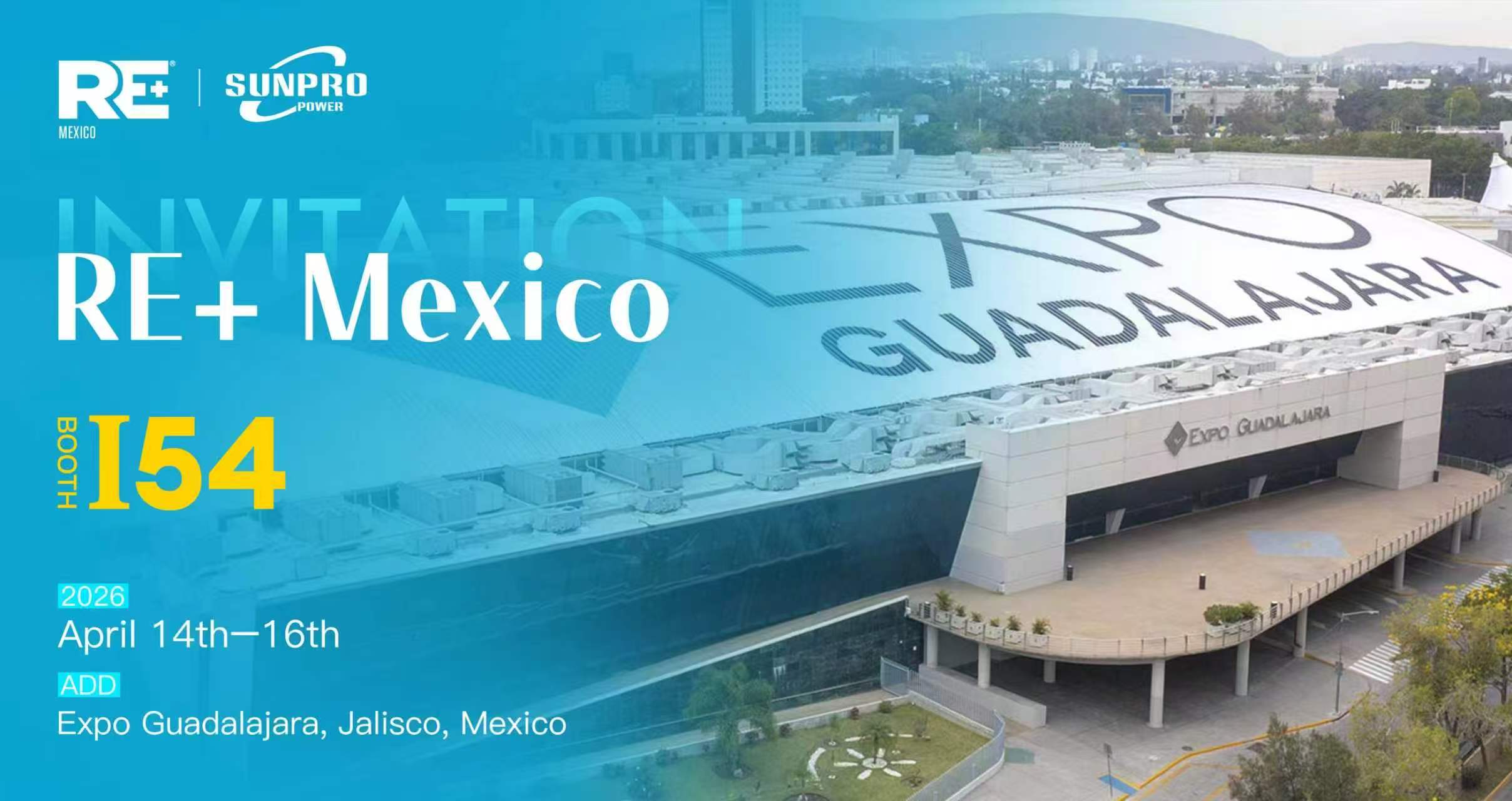 Green Energy Crosses Borders! SUNPRO POWER’s High-Efficiency Modules Shine at RE+ México 2026
 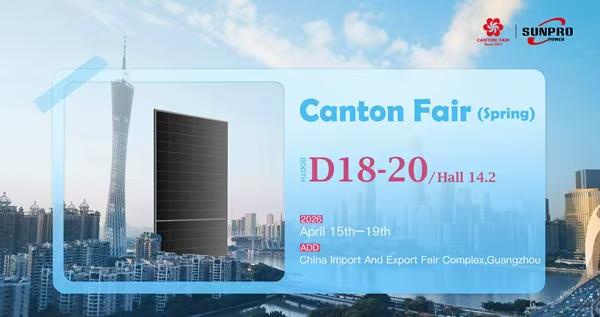 Hardcore Lineup Shines in Guangzhou! SUNPRO POWER’s High-Efficiency Modules Debut at the 139th Canton Fair
  Sunpro Earns Multiple ISO Certifications, Forging a Solid Foundation for Development with Rigorous Management
  Efficiency and Aesthetics in One: SUNPRO POWER's High-Efficiency Modules Shine at Key Energy 2026 Italy
  Major Certification! Multiple Sunpro TOPCon Modules Awarded France's PPE2 Carbon Footprint Certification, Unlocking the Green Pass to the French Market
  2026 Tier1 Q1 Ranking Announced | Sunpro Power Maintains Its Leading Position
  Kicking Off 2026 with a Grand Debut! Sunpro power Makes a Powerful Appearance at Intersolar Africa 2026, Illuminating Africa's Energy Future!
  Perovskite Solar Technology Achieves Major Breakthrough! Durability Challenge Conquered
  Poland's PV Target: 59.1GW by 2035, Emerging as a Key Driver of Europe's Energy Transition
  Sunpro Retains BloombergNEF Tier 1 PV Module Manufacturer Status for Q4 2025