
High temperature and heat damage will cause food prices to rise again! Small solar energy promotes agricultural income
Since July, the topic of weather has never stopped. The recent forest fires continue to dominate the headlines, reminding people that the red line of global warming is near. On August 7, the northern hemisphere entered autumn. According to the 24 solar terms, it is the beginning of autumn.

However, under the influence of such high temperature, it is not a good thing for the upcoming autumn harvest. According to the weather forecasts of various countries, the high temperature will continue throughout August, and the grain harvest of many countries will be severely reduced. The time for "baking" modern agriculture has come.
Drought reduces production and food prices rise again
The direct or indirect production reduction caused by this drought is very extensive. The direct causes include the burning forest fires in many countries in Europe, which are causing a large number of farmland to be burned and the output to drop sharply. And more is the indirect effect caused by high temperature.

According to the survey of the Italian Association of agriculture and animal husbandry, the agricultural losses caused by drought may reach 6 billion euros, resulting in a 10% drop in the national agricultural production. The Italian farmers' Union has also made a similar prediction: considering the annual output value of about 34 billion euros in the agricultural field, 10% of the GDP of the industry is at risk of vanishing.
Since the beginning of this year, affected by the energy crisis and war, the UN Food and agriculture program has been forced to issue a warning of food shortage. This drought will undoubtedly further worsen the situation. The autumn harvest is just around the corner, and food prices may rise again in the next few months.
Factors affecting agriculture -- air temperature
At present, the continuous high temperature weather in the northern hemisphere has reached the condition of high temperature heat damage. According to agricultural standards, if the maximum temperature exceeds 38 ℃ for three consecutive days, or the daily average temperature exceeds 33 ℃, it can be called high-temperature heat damage.
Under such climate conditions, the chlorophyll of crops will lose its activity, the photosynthetic efficiency will be reduced, the organs and tissues will be damaged, the nutrient transport capacity will be reduced, and the yield and quality will be affected. In aquaculture, high temperature is easy to cause dramatic changes in water quality and frequent fish diseases.


Plant growth height under the influence of diurnal temperature difference
DIF:Difference In Fahrenheit
(Source:《Thermomorphogenic responses in stem and leaf development.》)
Therefore, extreme weather tests the level of agricultural modernization, and it needs to increase the construction of infrastructure to ensure production. Today's modern agriculture also has the development direction of weakening meteorological factors, such as solar energy sharing agriculture.
Agricultural system with weakened climate impact
Generally speaking, in the strong light environment, the leaves of plants tend to be smaller, which is to adapt to the strong sunlight and thus inhibit the photosynthetic system. On the contrary, in low light environment, plants grow larger leaves to disperse the chlorophyll that absorbs sunlight. Farmers can harvest more leaves and stems. Similarly, heliophobe can grow better because of the reduction of light. Therefore, by affecting the illumination, the agricultural system that controls this characteristic comes into being, that is, solar energy sharing agriculture.

The photovoltaic module is built above the crops to form an open-air greenhouse to control the impact of light on the crops. On the other hand, the system does not simply serve crop growth.
In places with sufficient sunshine and temperature over 24 ℃, the power output of solar modules is poor due to high temperature. While the crops planted below will evaporate water during photosynthesis, resulting in local cooling. Thereby reducing the thermal stress of the overhead solar panel and improving the performance of the solar panel. To achieve complementary effects. Combined with the use of automatic watering, ventilation and heating equipment, it can improve the fine production of agriculture and effectively weaken the impact of climate factors on agriculture.
Solar energy sharing agriculture helps reduce emissions
At present, solar energy sharing agriculture has been widely promoted in Japan. The share of solar power generation has increased significantly in the past 6 to 7 years, and has leapt to the top of renewable energy, surpassing conventional large-scale hydropower.
According to this estimate, of the total agricultural area of 4.6 million hectares in Japan, if 3 million hectares are used for solar energy sharing, it can cover all the power consumption of Japan throughout the year. Even if only 1% of the farmland in Japan adopts this system, the installed capacity of photovoltaic power generation can reach about 30GW. It will help Japan achieve the set goal of zero net emissions by 2050, while providing land use efficiency.

The red box shows an area of 3 million hectares
——Data of cultivated land area map of Japan provided by CHO Technology Research Institute in 2014
Promotion of photovoltaic miniaturization
Apart from a few large farms, for most agricultural operators, the scale of using photovoltaic systems is not very large. There has always been a demand for miniaturization. Countries are also committed to promoting photovoltaic power generation as much as possible through miniaturization subsidies. For example, since July 30, the German government has nearly doubled the subsidies for the establishment of small photovoltaic systems, exceeding 13 euro cents / kWh.
On July 7, 2022, the German Bundestag passed a set of laws to expand the transformation of renewable energy. For solar system operators, the focus is on the revision of the renewable energy law (EEG 2023). In the revised Act, the German government subsidy makes a distinction between partial grid connection and full grid connection for the first time.
• full grid connection will receive an additional subsidy of up to 4.8 euro cents / kWh.
• solar energy equipment below 10kwp can receive 13.4 euro cents / kWh government subsidy,
• agricultural photovoltaic, floating photovoltaic and swamp photovoltaic will be included in the bidding system, and the government will provide high subsidies for such projects
By July 17, 2022, Germany has installed 64GW of solar energy equipment so far. From January to June, 2022, the amount of solar energy connected to the grid will increase by 16% year on year. Germany plans to have a total installed capacity of 215GW by 2030 and at least 22GW of solar energy installed each year. At such an installed speed, on the 21st of last month, Germany's solar power generation reached a historical record of 38174MW.

Although this is the policy of the German government, when the countries with the most expensive electricity tariffs in Europe are actively engaged in energy transformation, other countries affected by the energy crisis and high-temperature disasters will certainly follow suit. After all, after the high temperature, there may be a cold winter in the future. With government subsidies, solar energy sharing agriculture will have great advantages.
In the future, photovoltaic systems may occupy a very important share in the agricultural market, both for the photovoltaic industry and agricultural operators. Therefore, in combination with the characteristics of miniaturization, we recommend using conventional popular components with higher power, which can not only meet the miniaturization but also meet the needs of agriculture, such as:
***********************
“SPxxx-144M10”


A. The maximum power is 550W, M10 type monocrystalline silicon battery.
B. 10-busbars design, the conduction efficiency is better, and the maximum efficiency can reach 21.28%.
C. Quiet operation, no need to worry about noise pollution.
D. Flexible installation, both on the ground and roof, and effective use of space.
E. No additional raw materials, no emissions, 12 hours a day can produce electricity.
F. Longer service life, 12-year warranty, 25 year performance guarantee.
G. Strong environmental pressure resistance, capable of withstanding 2400pa wind pressure and 5000Pa snow pressure.
H. It has won TUV, CE, ISO and other international quality certification and fire protection certification to ensure that the products are put into efficient operation.
***********************
The global food supply has become severe due to the war between Russia and Ukraine. Now the heat wave has hit Europe and further worsened the problem. Even so, while stabilizing food production, climate impact needs to be considered. Such a complex problem also makes the current agriculture enter the stage of fine development. The concept of photovoltaic agriculture is also widely promoted in this context. Now with the support of government policies, it may be a good choice to plan for next year's harvest.
More information, more products
contact us
Tel: +86 0576-80730906
Email: info@sunpropower.com
Website: www.sunpropower com
【Disclaimer】
1/ The text used in the picture and information part of the source network, infringement deleted.
2/ The text and pictures are for readers' reference only, please refer to the actual situation.
 Radiant Gathering in São Paulo | Sunpro Power Showcases at Intersolar South America 2026
  Re‑elected Consecutively! Sunpro Power Reappears on BNEF Tier 1 List for Q3
  Sunpro Power’s PV Modules Earn Authoritative Certifications From TÜV SÜD, Robust Quality Fuels Global Market Expansion
  Shine Bright in Munich! Sunpro Power Showcases High-Efficiency Modules at Intersolar Europe 2026
  TÜV SÜD and Sunpro Power Sign ESG Strategic Cooperation Agreement to Empower Green Industrial & R&D Upgrading
  Powerful Lineup Debuts in Shanghai! Sunpro Power’s High-Efficiency Modules Shine at SNEC 2026
  Sunpro Power Secures Spot Again on BNEF Tier 1 List for 2026 Q2
  Hardcore Lineup Lands in Manila! Sunpro Power High-Efficiency Modules Shine at Solar & Storage Live Philippines 2026
  Hardcore Certification! Sunpro Passes TÜV Thresher Test, Reliability Receives Endorsement
  Smart Energy in Vienna! SUNPRO POWER Presents High-Efficiency Modules at Solar Solutions 2026
  Green Energy Crosses Borders! SUNPRO POWER’s High-Efficiency Modules Shine at RE+ México 2026
 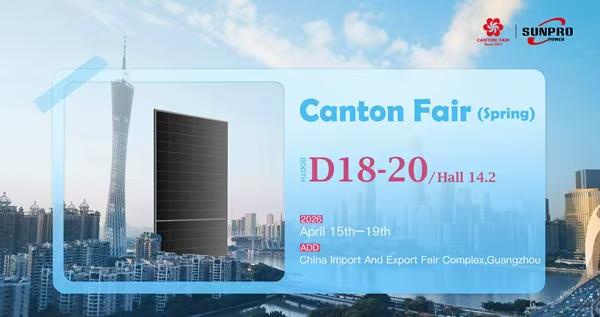 Hardcore Lineup Shines in Guangzhou! SUNPRO POWER’s High-Efficiency Modules Debut at the 139th Canton Fair
  Sunpro Earns Multiple ISO Certifications, Forging a Solid Foundation for Development with Rigorous Management
  Efficiency and Aesthetics in One: SUNPRO POWER's High-Efficiency Modules Shine at Key Energy 2026 Italy
  Major Certification! Multiple Sunpro TOPCon Modules Awarded France's PPE2 Carbon Footprint Certification, Unlocking the Green Pass to the French Market
  2026 Tier1 Q1 Ranking Announced | Sunpro Power Maintains Its Leading Position
 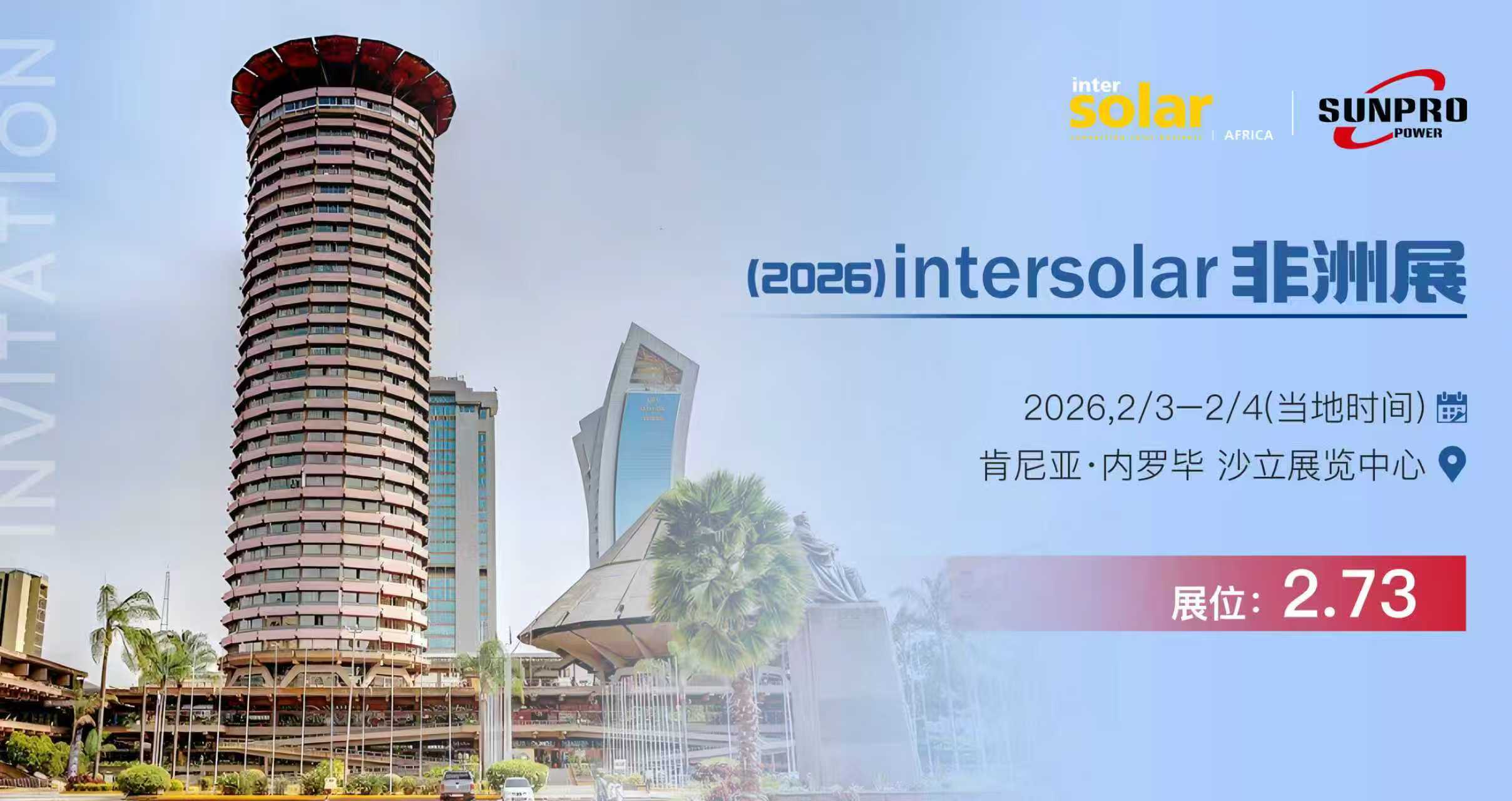 Kicking Off 2026 with a Grand Debut! Sunpro power Makes a Powerful Appearance at Intersolar Africa 2026, Illuminating Africa's Energy Future!
  Perovskite Solar Technology Achieves Major Breakthrough! Durability Challenge Conquered
  Poland's PV Target: 59.1GW by 2035, Emerging as a Key Driver of Europe's Energy Transition
  Sunpro Retains BloombergNEF Tier 1 PV Module Manufacturer Status for Q4 2025